2011年01月20日 14:17 來源:中國經濟網
中國經濟網北京1月20日訊 (實習記者 劉愔)
據英國每日電訊報網站1月18日報道,英國去年12月物價猛增,通貨膨脹率創8個月以來最高,給英國央行帶來加息的壓力。
官方數據顯示,去年12月通貨膨脹率達3.7%,此前的通貨膨脹率為3.3%。這一數據遠高於央行所制定的全年2%的通貨膨脹率的目標,也高於之前政策制定者3.6%的最高預期。 經濟學家認為當通貨膨脹率達到3.4%時,會引發物價的快速增長,這也增加了人們對央行貨幣政策委員會是否會將提高利率的討論。
能源和食品價格增長導致了英國通貨膨脹,目前國際油價為每桶100美元,世界範圍內的食品短缺也增加了對食品的需求。機票價格持續上漲,燃油和潤滑劑的價格上漲了2.8%,是自1996年以來從11月到12月的最大增長。由於主要能源供應商提高了他們的關稅,物價也隨著煤氣費增長。
人們擔心,隨著1月份增值稅調高至20%,通貨膨脹會進一步惡化,而油價的上升也會導致燃料費和水電費的進一步提高。英國央行預測,隨著營業稅的增加,通脹率會增加1.4個百分點,即使樂觀估計,也會增加0.7個百分點。
去年12月央行貨幣政策委員會的會議紀要顯示,委員會成員已經注意到2011年春季通脹率可能會達到4%,高於11月的通貨膨脹率。但英國央行擔心提升,利率會阻礙經濟的復蘇,認為像商品價格過高等問題只是暫時現象。
資本經紀公司(Capital Economics)英國經濟學家Samuel Tombs警告說,過高的能源價格會阻礙經濟的發展,因為過高的生活成本會增加人們的負擔。他還表示,當前每桶100美元的油價也會成為今年阻礙英國經濟恢復的一個絆腳石。
去年12月英國零售物價指數(RPI),包括對房價和工資等指數的統計,從4.7%增長至4.8%,為去年7月以來的最高水準。
source
2011/01/20

2011/01/19
英國債破兆 每戶負擔四萬英鎊
* 2011-01-19 * 中國時報 * 【江靜玲/倫敦十八日電】
英國政府負債首次突破一兆英鎊(約五十兆台幣),平均每戶負擔四萬英鎊(二百萬台幣)。這項數據顯示,英國經濟復甦,仍有一段艱困的路途。
根據英國國債紀錄鐘(UK National Debt Clock),英國政府的負債額十七日首次突破一兆英鎊。單在今年一年內,英國就必須支付四百卅億英鎊的利息,比國防預算三百六十九億英鎊還高。
這項數據令人震撼。十年前,英國的國債為三千億英鎊,五年前也未超過五千億英鎊。
英國納稅人聯盟指出,這項新高紀錄,尚未包括公家機關退休金、個人貸款、卡債和超支提款等負債,如果把這些都加起來,英國的國債可能接近八兆英鎊。每戶平均負債卅萬英鎊(約一千五百萬台幣)。
獨立智庫經濟暨商業研究中心表示,自去年十月政府公佈新財政預算後,英國陷入二度經濟衰退的機率,已從先前的十分之一,上升到五分之一。英國去年十二月的通貨膨脹率達三.七%,是十八個月以來的新高。
SOURCE
英國政府負債首次突破一兆英鎊(約五十兆台幣),平均每戶負擔四萬英鎊(二百萬台幣)。這項數據顯示,英國經濟復甦,仍有一段艱困的路途。
根據英國國債紀錄鐘(UK National Debt Clock),英國政府的負債額十七日首次突破一兆英鎊。單在今年一年內,英國就必須支付四百卅億英鎊的利息,比國防預算三百六十九億英鎊還高。
這項數據令人震撼。十年前,英國的國債為三千億英鎊,五年前也未超過五千億英鎊。
英國納稅人聯盟指出,這項新高紀錄,尚未包括公家機關退休金、個人貸款、卡債和超支提款等負債,如果把這些都加起來,英國的國債可能接近八兆英鎊。每戶平均負債卅萬英鎊(約一千五百萬台幣)。
獨立智庫經濟暨商業研究中心表示,自去年十月政府公佈新財政預算後,英國陷入二度經濟衰退的機率,已從先前的十分之一,上升到五分之一。英國去年十二月的通貨膨脹率達三.七%,是十八個月以來的新高。
SOURCE
2011/01/18
面對青年貧窮化:繽紛燦爛的國際教育展背後
2011-1-18 22:12 作者:林柏儀
「所有國際學生需要的資訊,一次滿足!」倫敦地鐵站裡的一張國際教育展海報,吸引了我的注意。
一方面為了更瞭解教育產業國際化的趨 勢,一方面也為了博士論文的田野暖身,我日前到了大學課程搜尋網站「HotCourses」於倫敦主辦的國際學生教育展(International Student Fair),透過當個逛教育展的準學生,來一探究竟:在英國辦的大學教育展、又聲稱專收國際學生,會是怎麼回事呢?
展覽在倫敦市中心的一家飯店舉辦。規模並沒有很大,約只有30餘間學校擺攤參加。和台灣動輒舉辦的大型英國教育展、澳洲教育展、歐洲教育展……比起來,規模並不凸出。這些參展的學校,大約有一半以上我過去沒有聽聞。
高教量販店 畢業證書換校名
在展場打轉了一個下午,得知了一些讓我驚訝的訊息。
很 多間我過去沒聽聞的學校,原來是一些正式大學的「分支」。例如,倫敦商學院(London College of Business)的職員告訴我:「我們是附屬於威爾斯大學(University of Wales)的學校;來念我們學校,畢了業,就可以拿到威爾斯大學的畢業證書。……而且,念我們學校的MBA,只要一年4千鎊(約19萬新台幣),是念威 爾斯大學一半不到的價錢。」我驚訝地問:「你說畢業證書可以拿威爾斯大學的?會一模一樣嗎?」他說:「是的,完全一模一樣。最多會加註學習地點在威爾斯大 學的倫敦校區。」
類似的模式還不少,諸如:展場上的馬麗迪安商學院(Meridian Business School),宣傳唸完可以取得英國保登大學(University of Bolton)頒發的學位。唸大學部一年學費是3千9百鎊。而且,這些學校對國際生(非歐盟學生)和對本地歐盟學生收費都一樣,沒有常見的「3倍學費」差 距。
我不禁問他們說:「為什麼你們的學費如此便宜?一般學校,學費至少要多一倍以上。」倫敦商學院的職員告訴我:「那是因為如果你去一般大 學,他們有著兩百個職員,得養他們;但我們只有10個,當然就可以便宜。課程上的差別,頂多是能選修的課少一些,但內容會是幾乎完全一樣的。我們的確會是 個更好的選擇。」
加錢可拿雙碩士
另外讓我印象深刻的是,展場上有一家從馬來西亞發展起來的「跨國私立大學」,叫做「林國 榮創意科技大學」(Limkokwing University of Creative Technoligy)。他們的職員告訴我,這間學校在馬來西亞是非常有名的好學校,在世界各大城市都有分部,共有3萬學生。如果來倫敦的分部念MBA, 一年的學費是7千鎊。如果再加1千5百鎊,還可以再拿一個英國格拉賽司特夏大學(University of Gloucestershire)的學位。「但上的課是一模一樣的,不會多。……也因此可以申請英國的畢業工作簽證(PSW)。」這間「跨國大學」還主推 了多種「雙聯學位」:兩年在馬來西亞念書,一年到英國、澳洲、或加拿大唸書,但可以拿到兩個學位。
英國老牌私校白金漢大學(The University of Buckingham)也來參展。他們打出「用兩年時間拿到別人得用三年的大學學位」廣告,強調它們特有「一年四學期制」的課程,可在兩年畢業,將可以省 下一年的時間和生活費。展場人員告訴我:「對國際生來說,足足可省下7千4百鎊。」儘管,兩年念下來學費加生活費依然要4萬3千6百鎊之多!
如何評判新興教育模式?
結束完了展覽,我手上拿著好幾袋的資料、上頭都精美地印著各學校的名字和課程回家。忽然覺得好像從另外一個世界回來了一樣,也為這些「新興教育模式」驚訝著。
該怎麼評價這些「沒名氣、但相對低學費、畢了業甚至能拿另一個學校的證書」的學校呢?或者關於有著那些「用較密集、但較短的時間就能畢業」的學校,到底好不好?
在世俗的論調裡頭,這些學校可能有些會被貶稱為「野雞大學」或者「學店」,暗指這些學校教育品質差,學生也不好;只要繳了錢,文憑就會到手裡。
然而,這種批評恐怕只是潛在地支持著「那些有名氣、有頭有臉的學校」才是正統、才是好的教育;而沒能揭露:「學店現象」背後,是有一種扭曲邏輯普遍性地影響著所有的學校。
這 些平價的「附屬學校」,往往其實是由這「頒發證書學校」所設立、擴大招生賺錢的一種策略。而這些學校在英國都是公立學校,依法盈餘也不能分配營利,為什麼 要這麼做?追溯原因,還是因為英國政府日益地刪減大學教育預算,要其「自籌財源」,所產生的歪風。沒了公共教育預算支持,學校要維生,只好將教育商品化。 只要買賣雙方合意,各種新興教育模式(或所謂的「亂象」),也就不足為奇了。
教育商品化影響是全面性的。有趣的是,這些被譏為「學店」的大 學,竟然不少收費比「老牌大學」更加便宜。恐怕後者在「賺錢」、「當學店」一事上,比前者賺得還多,只是沒說出來而已。實際上當前英國的非歐盟國際留學 生,普遍都得負擔1萬英鎊以上的學費,但根據英國教育統計,各大學平均的「每學生分得教育資源」只有7千至8千鎊而已,很明顯差額是被學校賺走了。不少學 校的MBA課程,收費更是從1萬5千鎊起跳,到3萬7千鎊之譜都有。收得越貴的通常是越知名的學校,例如劍橋大學的MBA對國際生一年要價3萬7,229 鎊,牛津大學要3萬6千鎊!
面對讓教育異化的根源
有些站在「國家競爭力」角度的人們,可能會覺得這種現象將影響高等教育 培養出來的技術勞動力品質,也拖垮文憑價值,所以應當管制。但現實是,管制還是無法解消人們對文憑的源源不絕需求,而且很可能只是成了既有文憑利益階層的 反撲。實際上,那些昂貴的名校也未必真的培養出了較高品質的技術勞動力,而很可能純粹是「名氣」響亮,所以可以多收費;如今有了這些沒名氣的「附屬學 校」,收費較便宜,來搶攻低價市場。但很難說後者就一定在技術訓練的品質上比較差,或者較前者缺乏全人教育的精神。其實,究其教育活動得為資本雇傭的壓力 所服務,恐怕都是一樣的。
根本的問題還是,在資本主義社會下,一方面勞工在失業壓力下渴望取得更高的文憑,來保障自己能取得好工作以維生。 人們自然從關心教育的內在「使用價值」(例如:有無啟蒙長智、促成心靈發展、能力提升?),到了只關心教育的外在「交換價值」(例如:能否換得好工作?要 多少學費?),也因此有著對所謂「野雞大學」(倘若又便宜、又能換到一樣的文憑)的持續需求。另一方面大學倘若沒有了公共資源支助,當然也得以牟利為目 的,無所不用其極地來開擴財源。
因此,根本的問題不在這群學生身上,學校也只是壓迫邏輯的代理者,要解決這些問題,還是得回到對抗資本主義 邏輯、尋找替代性的經濟系統,才有可能解消這一切災難。只有當人們不再是為了競爭僱傭機會而求學,各種新的或舊的教育異化現象才能解消。否則,單單批評 「野雞大學」是「學店」,卻無視「普遍的學店化」,以及背後的擴張動力;繽紛燦爛的教育展,也將依然一再舉行。
(倫敦大學Goldsmiths學院社會學博士生)

▲英國一名學生於2004年1月8日走在劍橋的國王學院後花園(The backs)。(圖文/路透)
媒體稱世界經濟重心東移 英國外交重點轉向中印
http://news.sina.com 2011年01月17日 16:51 北京新浪網
黑格稱英國外交重點將轉向東方
中新網1月18日電 據英國廣播公司報道,英國外相黑格17日表示,英國將積極與印度和中國等亞洲新興經濟體深化關係。黑格17日在香港舉行的亞洲金融論壇上演說時發出了上述言論。他說,改善關係的目標還包括拉丁美洲和波斯灣國家。
黑格表示,世界經濟重心正向南方和東方國家轉移,因此英國的外交政策也需要跟隨調整。
他說,英國已經開始重振與日本的關係,致力於與印度建立新的特殊關係並開始與中國建立共同成長伙伴關係。
在演講中,黑格強調英國聯合政府的對外關係重點是:重振雙邊關係、在新興市場國家致力於人際交往,大力宣傳英國並致力於加強國際體系。
亞洲重要性
在講話中,黑格提及亞洲對英國商界的重要性,他說:“英國商業的經濟指南針應該牢牢指向東方,因為日本和中國是英國關鍵的奢侈品行業在全球最大的兩個市場”。
在外交層面,黑格說“將特別關注中國這個世界第二大經濟體,聯合國安理會常任理事國和G20內的重要聲音”。
英國過人之處
黑格在講話中還提到英國對亞洲投資者和企業家所擁有的獨特之處:英國是世界金融中心之一,是世界上最開放的經濟體,也是面向歐洲大陸的基地。
倫敦將設立新的商務法庭,成為國際商務案件的審理中心。
此外,據英國外交部統計,英國是中國在歐洲最大的投資國,接納了包括中國諸多電訊巨頭在內的420家中國公司。
黑格周二將從香港轉往澳大利亞和新西蘭訪問。這將是英國外相20年來首次到訪這兩個英聯邦國家。
source
2011/01/16
CEBR:失業率增長、通膨壓力上升 英國經濟再衰退機率達20%
鉅亨網新聞中心 (來源:世華財訊) 2011-01-14 13:55:23 網友評論 0 條 我來說兩句 Blog談新聞 上則 下則
失業率增長、通脹加速上揚,英國經濟出現顯著增長殊為不易,一知名經濟研究機構甚至預計該國有20%的可能性陷入另一波經濟衰退。
284
Ads by Google
為何該投資中國與印度www.pinebridge.com.tw中國消費進入黃金十年,印度基礎建設急起直追。投資中印,更待何時?
失業率增長、通脹加速上揚,英國經濟出現顯著增長殊為不易,一知名經濟研究機構甚至預計該國有20%的可能性陷入另一波經濟衰退。
英國經濟和商業研究中心(Centre for Economics and Business Research,簡稱CEBR)14日表示,由於失業率增長,通脹快速上揚,英國經濟有20%的可能性陷入另一波衰退。
這家位於倫敦的研究機構在電子郵件聲明中指出,預計2011年英國經濟將增長1.1%,低於2010年10月份預期的1.3%。聲明稱,增速放緩將英國經濟陷入衰退的可能性從之前的10%提升至20%。
CEBR經濟學家Scott Corfe表示,做出此番修正的原因是勞動力市場指標持續疲軟,消費者物價大幅上揚。“考慮到國內需求可能較弱,很難想象英國經濟會如何出現顯著增長。”
該機構在聲明中表示,英國央行(BOE)可能被迫擴大債券購買規模,但這取決於通脹下滑。英國11月份通脹率為3.3%,繼續超出政府設定的上限。英國央行在13日的政策會議上決定維持債券購買規模於2,000億英鎊(3,170億美元)不變,同時維持基準利率於0.5%的歷史低位不變。
CEBR將2010年英國經濟增幅預期從1.5%上調至1.8%,同時將2012年經濟增幅預期從1.4%上調至1.5%。該機構還預計通脹將在2011年加速上揚至4%附近,而后到2012年年中降至1.6%。
(劉杰 編譯)
source
失業率增長、通脹加速上揚,英國經濟出現顯著增長殊為不易,一知名經濟研究機構甚至預計該國有20%的可能性陷入另一波經濟衰退。
284
Ads by Google
為何該投資中國與印度www.pinebridge.com.tw中國消費進入黃金十年,印度基礎建設急起直追。投資中印,更待何時?
失業率增長、通脹加速上揚,英國經濟出現顯著增長殊為不易,一知名經濟研究機構甚至預計該國有20%的可能性陷入另一波經濟衰退。
英國經濟和商業研究中心(Centre for Economics and Business Research,簡稱CEBR)14日表示,由於失業率增長,通脹快速上揚,英國經濟有20%的可能性陷入另一波衰退。
這家位於倫敦的研究機構在電子郵件聲明中指出,預計2011年英國經濟將增長1.1%,低於2010年10月份預期的1.3%。聲明稱,增速放緩將英國經濟陷入衰退的可能性從之前的10%提升至20%。
CEBR經濟學家Scott Corfe表示,做出此番修正的原因是勞動力市場指標持續疲軟,消費者物價大幅上揚。“考慮到國內需求可能較弱,很難想象英國經濟會如何出現顯著增長。”
該機構在聲明中表示,英國央行(BOE)可能被迫擴大債券購買規模,但這取決於通脹下滑。英國11月份通脹率為3.3%,繼續超出政府設定的上限。英國央行在13日的政策會議上決定維持債券購買規模於2,000億英鎊(3,170億美元)不變,同時維持基準利率於0.5%的歷史低位不變。
CEBR將2010年英國經濟增幅預期從1.5%上調至1.8%,同時將2012年經濟增幅預期從1.4%上調至1.5%。該機構還預計通脹將在2011年加速上揚至4%附近,而后到2012年年中降至1.6%。
(劉杰 編譯)
source
全民公敵
| ||
| 英國《經濟學人》和美國《時代》雜誌探討「公僕」變成「全民公敵」的情況。歐洲各國不堪債臺高築,紛紛採取削減預算、緊縮開支的措施,「撙節」(austerity)獲選為年度的風雲字彙。 公務員和國營事業員工首當其衝。法國延後法定退休年齡,引起大罷工。大學生也上街頭,因為就業已不容易,延退將使情勢雪上加霜。屆齡退休人士也不滿,認為是享清福的時候,該把機會讓給年輕人。 在美國,聯邦政府對印鈔救市的量化寬鬆政策食髓知味,但共和黨已揚言不會讓歐巴馬輕易提高舉債上限。州政府和地方政府則哀鴻遍野,裁員減薪雙管齊下。公務員不好受,但仍勝過民間企業員工,因福利遭削減走上街頭,遭痛批乃意料中事。 經濟景氣的時候,大家都爭著捧理想中的「金飯碗」,對軍公教的「鐵飯碗」興趣缺缺;經濟不景氣時則相反。特別經過1997和2008年兩波金融風暴與海嘯的摧殘,「金飯碗」雖仍誘人,其中的高風險也讓人心驚膽戰。昔日被戲稱為「吃不飽,餓不死」的「鐵飯碗」反而備受青睞。 優秀人才,政府和民間都想延攬。新加坡內閣閣員的年薪之高,與大企業頂級經理人不相上下。其他國家政府無法提供這麼高的年薪,則透過相對優厚的福利和退休金制度,設法吸引人才。 在台灣,民進黨痛批18趴的優惠利率存款政策,結果一票前朝要員都是受惠者,包括黨主席蔡英文,正所謂:「得」不孤,必有鄰。東窗事發後,蔡英文才趕緊宣布放棄。 民進黨邊罵邊拿,「得了便宜還賣乖」的手法也用來對付中華民國憲法,依照憲法當過正副總統或正副行政院長的人,拚命詆毀憲法。與維護權益被批得體無完膚的公務員相比,誰才是「全民公敵」? | ||
| source |
2011/01/13
鐵娘子的一千天
有「鐵娘子」稱號的英國前首相柴契爾夫人(Margaret Thatcher ),以作風剛強、行事果斷著稱,不但是英國首任女首相,執政時間長達 11 年,帶領英國走出當時面臨的嚴竣經濟挑戰。近來解密的 30 年前文件更顯示,執政初期的柴契爾幾乎被孤立,在她堅持政策的決心下,大不列顛才得以走出困局。 據《每日郵報》報導,解密文件顯示,柴契爾當年力抗前任首相 Harold Macmillan、英央行總裁 Gordon Richardson ,以及她自己的財政大臣 Geoffrey Howe,才得以堅持她的財經政策。
文件顯示,在 1980 年,也就是柴契爾成為首相的第 2 年,她開始了一個具爭議的計畫, 以挽救當時岌岌可危的經濟。她的做法是大幅削減公共開支、緊縮銀根,以期打擊通膨。
計畫之初效果並不如人意,年中時,通膨來到驚人的 22%,失業人數增加到 280 萬人,企業抱怨緊縮讓他們喘不過氣來-這帖經濟特效藥,看不出有讓經濟起死回生的可能。
綽號「Supermac」的前首相 Macmillan 率先發難,寫了長達 11 頁的批評信,指責柴契爾的緊縮做法,將讓英國陷入持續衰退的風險。他警告說,這麼做固然可以讓她的支持者覺得興奮,但卻讓國家工業陷入崩落危機,失業人數達到危險的程度。
Macmillan 指出,柴契爾放棄了政策的共識,追逐激進的改革,將導致政治上的分歧,也違背民主的本質。
由現在的眼光回頭來看,「共識政治」雖然讓英國從二次大戰後到 70 年代中期,獲得前所未見的經濟成長,但也被視為是英國 70 年代末期經濟邁向死寂的成因。多年之後,柴契爾也在她的回憶錄強力抨擊「共識政治」,質疑在「我支持共識」的大帽之下,根本無法奮戰並贏得任何偉大的成 就。
然而在 1980 年,Macmillan 仍然有其政治影響力,足以讓保守黨政府陷入危機。Macmillan 最質疑之處,在於柴契爾十分在意貨幣供給。Macmillan 則認為,它的作用僅僅像是汽車的里程表,雖然有參考價值,卻無法讓汽車因此走得更快或更慢。
到 1981 年,更有多達 365 名經濟學家聯名寫到《泰晤士報》,要求柴契爾改變政策,以減少國家因衰退造成的危害。
但是柴契爾不為所動。她堅持政策的硬頸做法,讓英國的通膨由 27% 下滑,接下來連 4 年都只有 4%,英國自此走向經濟復興之路。
柴契爾的經濟主張受到右翼內閣部長 Keith Joseph 的影響,傾向自由市場的想法,另外也深受美國經濟學家 Milton Friedman 影響,他所提出的貨幣供應理論,也挑戰二次戰後所流行的經濟思潮。1981 年,柴契爾聘用了 Alan Walters 做為經濟顧問,繼續行貨幣政策。
到了 1985 年之後,Macmillan 對柴契爾的批評公開化,怒斥她的企業民營化策略,是「販賣家裡的白銀」。
文件也顯示,柴契爾不滿當時的英國央行總裁 Richardson,指他破壞政府全盤的經濟計畫,並指責他和財政大臣都未能做好控制貨幣供給的任務。
依據文件,柴契爾指責 2 人,並表示國際銀行界都清楚,英國的貨幣供給己經失控了。於是,再下個月,柴契爾就發表了那篇著名的國會演說「本夫人絕不回頭(The lady’s not for turning)」,強硬地說:「你們可以轉彎,但本夫人絕不會回頭!」
由這個角度看,是柴契爾的堅持讓英國走出一度混亂的局面,但也有人認為,如今英國的傳統產業環境惡化,與貧富不均的現象,也是柴契爾新保守主義的做法所帶來的結果。
相關的解密文件也顯示,在 1979 年蘇聯入侵阿富汗之後,英國、美國在 3 周後祕密會商,並決定支持阿富汗的反對運動。
英國、美國和法國於 1980 年 1 月於巴黎開會,並決定動員及支持「伊斯蘭反抗運動」,認為這對西方國家有利。在 2008 年電影《蓋世奇才(Charlie Wilson’s War)》多少描述了美國在此的介入,不過英國也涉入,則較少被提及。
依相關文件,3國在巴黎討論後認為,無法正式派遣軍隊或提供武器,但探討了支援游擊隊的可行方式,最終提供了他們輕型火力以及通訊裝備。
這個關鍵的決定,同樣地也催生了蓋達組織及塔利班,而現在英美國家反而必須回過頭,和他們認定的恐怖分子對抗。
眾所周知,柴契爾夫人任內和美國雷根(Ronald Reagan)政府密切合作,建立了親密的盟友關係,這次鐵娘子甚至對外說,雷根是她生命中除了丈夫以外,「第二重要的男性」。
不過解密文件顯示,在柴契爾執政初期,英國官員並不看好這位前好萊塢明星有機會當選總統。官員認為,雷根在 1980 年競選期間,犯了「巨大的錯誤」。據英國大使 Nicholas Henderson 的觀察,時年 69 歲的雷根欠缺擔任總統該有的智力。
Henderson 在 1980 年 4 月這麼寫:「最讓人憂心的,不僅是他的年紀,還有他是否擁有精神活力,以及足夠的政治視野,來應付國家及國際間,緊急且時刻轉變的問題,並管理這廣大,而且許多方面難以管理的國家。」
向來反對英國加入歐洲經濟共同體(European Economic Community)的柴契爾,其反對態度在解密的文件中更是一覽無遺,她努力抵抗,對 EEC 多項要求的回答,都是「不!不!不!」
在她擔任首相之前,英國已經加入有 9 個會員國的 EEC,當時英國要為農業、社會及工業相關計畫付出 10 億英鎊,但獲得的回報卻不多,為此,柴契爾發揮她「鐵娘子」作用,要力爭降價。
在 1979 年一次祕密的簡報中,官員告訴他,在發現北海原油之後,法國及德國都施加壓力,要求適當的優惠。她草率地寫著:「我們的資源很少,我不想討價還價。說我們可以要回一些我們的錢,卻必須放棄部分我們的石油,這種說法真是荒謬。」
在 1980 年,財政大臣上呈便箋,希望她能妥協,以解決在折扣問題上的「死結」。她不為所動,用藍筆在便箋上方寫上:「不,這個程序是荒謬的。」
她強調:「整個目的是在貶低英國,...,我們必須要為此奮戰,即使有必要公開。」
經過 3 年的角力,1981 年時,10 億英鎊中,3 分之 2 的折扣終獲得同意。而在 1984年,這類扣繳成為永久的調整。
相同的反對,也在共同漁業政策上。為此,農業部長 Peter Walker 發出密信警告她,「磨擦」的政策恐怕行不通,反而會加深在漁業政策上的不確定性。她回應:「這是我們的水域,而且這獨特的公共資源,是我們的魚。」
這位部長建議,可先透過協商,獲得初步的協議。她則是回了一個大大的字:「不(NO)」!
SOURCE
文件顯示,在 1980 年,也就是柴契爾成為首相的第 2 年,她開始了一個具爭議的計畫, 以挽救當時岌岌可危的經濟。她的做法是大幅削減公共開支、緊縮銀根,以期打擊通膨。
計畫之初效果並不如人意,年中時,通膨來到驚人的 22%,失業人數增加到 280 萬人,企業抱怨緊縮讓他們喘不過氣來-這帖經濟特效藥,看不出有讓經濟起死回生的可能。
綽號「Supermac」的前首相 Macmillan 率先發難,寫了長達 11 頁的批評信,指責柴契爾的緊縮做法,將讓英國陷入持續衰退的風險。他警告說,這麼做固然可以讓她的支持者覺得興奮,但卻讓國家工業陷入崩落危機,失業人數達到危險的程度。
Macmillan 指出,柴契爾放棄了政策的共識,追逐激進的改革,將導致政治上的分歧,也違背民主的本質。
由現在的眼光回頭來看,「共識政治」雖然讓英國從二次大戰後到 70 年代中期,獲得前所未見的經濟成長,但也被視為是英國 70 年代末期經濟邁向死寂的成因。多年之後,柴契爾也在她的回憶錄強力抨擊「共識政治」,質疑在「我支持共識」的大帽之下,根本無法奮戰並贏得任何偉大的成 就。
然而在 1980 年,Macmillan 仍然有其政治影響力,足以讓保守黨政府陷入危機。Macmillan 最質疑之處,在於柴契爾十分在意貨幣供給。Macmillan 則認為,它的作用僅僅像是汽車的里程表,雖然有參考價值,卻無法讓汽車因此走得更快或更慢。
到 1981 年,更有多達 365 名經濟學家聯名寫到《泰晤士報》,要求柴契爾改變政策,以減少國家因衰退造成的危害。
但是柴契爾不為所動。她堅持政策的硬頸做法,讓英國的通膨由 27% 下滑,接下來連 4 年都只有 4%,英國自此走向經濟復興之路。
柴契爾的經濟主張受到右翼內閣部長 Keith Joseph 的影響,傾向自由市場的想法,另外也深受美國經濟學家 Milton Friedman 影響,他所提出的貨幣供應理論,也挑戰二次戰後所流行的經濟思潮。1981 年,柴契爾聘用了 Alan Walters 做為經濟顧問,繼續行貨幣政策。
到了 1985 年之後,Macmillan 對柴契爾的批評公開化,怒斥她的企業民營化策略,是「販賣家裡的白銀」。
文件也顯示,柴契爾不滿當時的英國央行總裁 Richardson,指他破壞政府全盤的經濟計畫,並指責他和財政大臣都未能做好控制貨幣供給的任務。
依據文件,柴契爾指責 2 人,並表示國際銀行界都清楚,英國的貨幣供給己經失控了。於是,再下個月,柴契爾就發表了那篇著名的國會演說「本夫人絕不回頭(The lady’s not for turning)」,強硬地說:「你們可以轉彎,但本夫人絕不會回頭!」
由這個角度看,是柴契爾的堅持讓英國走出一度混亂的局面,但也有人認為,如今英國的傳統產業環境惡化,與貧富不均的現象,也是柴契爾新保守主義的做法所帶來的結果。
相關的解密文件也顯示,在 1979 年蘇聯入侵阿富汗之後,英國、美國在 3 周後祕密會商,並決定支持阿富汗的反對運動。
英國、美國和法國於 1980 年 1 月於巴黎開會,並決定動員及支持「伊斯蘭反抗運動」,認為這對西方國家有利。在 2008 年電影《蓋世奇才(Charlie Wilson’s War)》多少描述了美國在此的介入,不過英國也涉入,則較少被提及。
依相關文件,3國在巴黎討論後認為,無法正式派遣軍隊或提供武器,但探討了支援游擊隊的可行方式,最終提供了他們輕型火力以及通訊裝備。
這個關鍵的決定,同樣地也催生了蓋達組織及塔利班,而現在英美國家反而必須回過頭,和他們認定的恐怖分子對抗。
眾所周知,柴契爾夫人任內和美國雷根(Ronald Reagan)政府密切合作,建立了親密的盟友關係,這次鐵娘子甚至對外說,雷根是她生命中除了丈夫以外,「第二重要的男性」。
不過解密文件顯示,在柴契爾執政初期,英國官員並不看好這位前好萊塢明星有機會當選總統。官員認為,雷根在 1980 年競選期間,犯了「巨大的錯誤」。據英國大使 Nicholas Henderson 的觀察,時年 69 歲的雷根欠缺擔任總統該有的智力。
Henderson 在 1980 年 4 月這麼寫:「最讓人憂心的,不僅是他的年紀,還有他是否擁有精神活力,以及足夠的政治視野,來應付國家及國際間,緊急且時刻轉變的問題,並管理這廣大,而且許多方面難以管理的國家。」
向來反對英國加入歐洲經濟共同體(European Economic Community)的柴契爾,其反對態度在解密的文件中更是一覽無遺,她努力抵抗,對 EEC 多項要求的回答,都是「不!不!不!」
在她擔任首相之前,英國已經加入有 9 個會員國的 EEC,當時英國要為農業、社會及工業相關計畫付出 10 億英鎊,但獲得的回報卻不多,為此,柴契爾發揮她「鐵娘子」作用,要力爭降價。
在 1979 年一次祕密的簡報中,官員告訴他,在發現北海原油之後,法國及德國都施加壓力,要求適當的優惠。她草率地寫著:「我們的資源很少,我不想討價還價。說我們可以要回一些我們的錢,卻必須放棄部分我們的石油,這種說法真是荒謬。」
在 1980 年,財政大臣上呈便箋,希望她能妥協,以解決在折扣問題上的「死結」。她不為所動,用藍筆在便箋上方寫上:「不,這個程序是荒謬的。」
她強調:「整個目的是在貶低英國,...,我們必須要為此奮戰,即使有必要公開。」
經過 3 年的角力,1981 年時,10 億英鎊中,3 分之 2 的折扣終獲得同意。而在 1984年,這類扣繳成為永久的調整。
相同的反對,也在共同漁業政策上。為此,農業部長 Peter Walker 發出密信警告她,「磨擦」的政策恐怕行不通,反而會加深在漁業政策上的不確定性。她回應:「這是我們的水域,而且這獨特的公共資源,是我們的魚。」
這位部長建議,可先透過協商,獲得初步的協議。她則是回了一個大大的字:「不(NO)」!
SOURCE
2011/01/12
夏宇/要愛他們沒有分別/但要分別與他們做愛/愈混樂隊

這是一套雙CD專輯。長條版包裝,封面由夏宇畫作製作。見圖
專輯音樂部份的製作人是陳柔錚。他邀集了一群年輕的樂手替夏宇詩作譜曲歌,
逐一演唱,夏宇本人則在歌與歌之間朗誦自己的作品,配上音樂,也在許多歌曲
中現聲。
參與錄音的樂團如下︰
噬菌體、小歪(海豚樂隊)、Rj Group(陳柔錚的團)、Lisa、 Faye、
玫熹(是娟)、王斯禹(路邊攤)、Juice(路邊攤)
專輯曲目︰
CD1
01. Fusion Kitsch
02. 錯不在我
03. 更趨向存在
04. 無事可做
05. 進入黑暗的心
06. 在每一個狂野低吟的夜晚
07. 被綁起來等待
08. 不疑有他她牠它祂
09. 將我戴在你的臂上如戳記
10. 刺青
11. 繼續討論厭煩
CD2
01. 寂寞城市
02. 盲目旅行
03. 雨人
04. 蒙馬特
05. 無限
06. 遊行隊伍
07. 像一封情書
08. 同日而語
09. 朝生暮死
10. Transported, Taipei
11. Now Now Now
12. 黑暗中的眼睛
13. Bad Trip
夏宇的歌詞
CD I
1. Fusion Kitsch
什麼時候開始的
這牧歌式的泛亂倫氣氛
那早就屬於同一本家庭相本的
已經淪落為親人的愛人們
那些淪落為愛人的動物們
還有所有羅曼史最終到達
之萬物有靈論述
裡的壓抑傾向
2. 錯不在我
曲、主唱:噬菌體
錯不在我我被誘惑
被誘惑被你誘惑
我被你誘惑
被誘惑
本來只想被愛
享受任性和壞
到底那一步弄錯
我發現我比想像中
還要迷惑
錯不在我我被誘惑
被誘惑被你誘惑
我被你誘惑
被誘惑
只有咒語可以解除咒語
只有祕密可以交換祕密
只有謎可以到達另一個謎
有一天醒來突然問自己
這就是未來嗎
這就是從前
所耿耿於懷的未來嗎
那個時候的現在
所害怕到達的未來
裡
你以為就叫
現在的現在
而我以為的
早已過去的未來
被誘惑我被誘惑
怪的是那個誘惑的人
怎麼會是會是被誘惑的我
被誘惑被你誘惑
多情的愚人千千萬萬個
只有我一步踩空直線墜落
錯不在我我被誘惑
被誘惑被你誘惑
3. 更趨向存在
我決定先認錯
為那些終究要犯的錯
我走音
而且無法重複走過的音
4. 無事可做
曲、主唱:小歪(海豚樂隊)
感覺什麼正在破裂
感覺什麼正在毀滅
躺在床上百無聊賴
躺在床上時代正在走開
用最失敗的方法儘情佔有你
先放棄就不會失去
要愛他們沒有分別
但要分別與他們做愛
不要干涉他們的生活細節
但發給每個人一個插頭
一罐蜂蜜,一段繩子
要不遺餘力給每個人等量的貓食
但不要給他們貓
你不必同時愛他們
但可以同時與他們做愛
用最失敗的方法儘情佔有你
先放棄就不會失去
你淺淺的笑像風
你的沉默很寬闊
是我任意地猜測
你的睡是一種赤裸
用最失敗的方法儘情佔有你
先放棄就不會失去
當他們問你什麼時候給我們那隻貓
就給他們一點奇怪的建議
說服他們這些都不是暫時的
要他們忘了貓再次給他們等量的貓食
其中一定有一個人比較脆弱
對凡事均不能貫徹你就給他拍張照片
讓他比較醒目你單獨跟他說:
來,你把這些畫在牆上貼好然後
把這些抽屜全部打開
然後關好。他做好這些事
你不要忘記讚美他
你像雨般地傾斜
回憶像傘般降落
純粹純粹地傾斜
在荒原般的黑夜
夢是謎底也是謎面
給你的詩總是撕碎
不如寫給燦爛這星夜
雖然你也發著光
你的身體是一種瘋狂
你的眼睛是叫做遺忘
5. 進入黑暗的心
曲、主唱:Rj、Lisa
你的名字緩緩滴著
且在寂靜中流著
流散著它底水
6. 在每一個狂野低吟的夜晚
曲、演唱:Rj (Rj Group)
在每一個狂野低吟的夜晚
酒無人勸 醉也無人管
在全世界冰冷擁擠的夜晚
愛過的女人一字排開
我知道因為我的愛所以你們存在
像我這樣一個頹廢派
是我無遠弗屆的想像
讓你們無與倫比的精彩
在每一個狂野低吟的夜晚
酒無人勸 醉也無人管
在全世界熱鬧疏離的夜晚
有那麼多女人等著去愛
我知道因為不佔有所以不會弄壞
像我這樣一個阿Q派
這樣若即若離的情懷
再怎麼愛都不會錯愛
一個人搬家後所留出來的空間
不愛的時候這些多麼不重要
就會被另一個想搬家的人佔據
甚至懶得敘述它們的不重要性
所留出來的空間也就製造出
就是一個必須經過的城市
另一搬家動機以此類推種種
火車停靠讓上車的人上車
你不愛他就有別人不愛你
下車的人下車我與鄰座的人
的種種 fuckable-
保持不動繼續旅行他意識到
的種種 unfuckable-
他的不重要性是我的賦予
所根據歌德萬物包含萬物
之後不會記得記得了也沒有將就
萬物與萬物有關與萬物
屬於一切意義連否認
對應辯證
也嫌太多的曾經
一同毀滅重生
某時某刻遇見過又怎麼樣
我們大家與萬物
的我們只是使今後的我們
就都又重新就都又大家
更不重要我們
又興奮起來
根本不重要
愛讓她們驕傲
愛讓她們美麗
她們越驕傲我愛得越慷慨
她們越美麗我愛得越有意義
當一切越來越有意義
一切的一切就更有想像力
7. 被綁起來等待
以心靈力量彎曲金屬
以心靈力量停止鐘錶指針
以心靈力量啟動開關
我在我的皮膚裡聞到你
我在我的皮膚裡聞到你
我在我的皮膚裡聞到你
我正在經驗而且而且我正在經驗經驗
剩下的
就讓我一字一字刻在那粒米上
剩下的
就讓我一字一字刻在那根髮上
剩下的
我帶著贖金按照說好的時間
來到約定的地點
但是綁匪並沒有出現
他總是那麼猶豫
我不懂他的猶豫
我並沒有報警
甚至也不認識那肉票
我也曾被綁票的優雅風格所吸引
被就是被綁起來等待這件事
8. 不疑有他她牠它祂
曲、主唱:噬菌體
我不是故意的要讓你難過
只是對自己並沒有那麼大把握
看到你出去一個小時回來後那麼快樂
我懷疑我的存在只是為了見證存在的脆弱
「我們雜交
但這些並不猥褻
誰都和誰睡過
大家也變成朋友。」
我並沒有拖住你不讓你走
只是愛你已經變成我生存的藉口
看到你跟我在一起有時候悶悶不樂
我懷疑除了愛我是不是可能還要再給什麼
因為愛而引致的悲傷就說服
了我。光是悲傷就令人
不同凡響
不疑有他她牠它祂
我真想把椅子摔了掉頭就走
不疑有他她牠它祂
我實在找不到證據假裝沒有
到底我的靈魂重複鑲嵌過多少身體
而那一個
現在正在愛著你
是的是有過幾次崩潰
雖不方便說一切發生過
但是是朝發生的方向前進有過那幾次崩潰
看來未來
是要平順得多
但是我們不記得未來
我沒有力氣追究那些是非對錯
這遊戲勝負不明規則結果都不適合我
我明白除了愛你我簡直完全一無所有
還有這首歌除了押韻找不到其他意義可以挽救
不疑有他她牠它祂
我真想把椅子摔了掉頭就走
不疑有他她牠它祂
我實在找不到證據假裝沒有
不疑有他她牠它祂
但我隱約知道我絕不是對手
不疑有他她牠它祂
但是你眼中到底有沒有我
9. 將我戴在你的臂上如戳記
〞請你將我放在心上如印記
將我戴在你的臂上如戳記〞
-- 引自聖經
10. 刺青
曲、演唱:Rj、噬菌體、Faye
他的身體 擁有複雜的回憶
每個回憶 都化做一個刺青
每個圖案 都無與倫比
每個名字 都無可代替
你不曾見過 這樣的一個肉體
有這麼多 愛與不愛的證據
新的符號 剛被刺上去
他的心 又有了新的主意
愛的時候深深刺進去 不愛時候又磨平洗乾淨
愈重要的愛位置愈隱密 也不是後悔只是真的無所謂
愛的時候深深刺進去 不愛時候要徹底磨乾淨
愛的時候長一層新皮 皮愈來愈厚愛人也愈來愈多
從此以後 金剛不壞
從此以後 你才是真愛
從此以後 金剛不壞
從此以後 你才是真愛
11. 繼續討論厭煩
所以我們必須繼續討論厭煩
厭煩的東西都是厭煩的
任何厭煩的東西都是厭煩的
事實上只有厭煩的東西才是
厭煩的
它不必被發現,它在。
它有一種遙遠而清澈的感覺
有一點瘋狂
也有懷舊和戰慄的情愫
其實也離道德不遠
你要怎麼形容厭煩的味道呢?
只有最老成持重的侍者會說:
「你要怎麼形容橘子的味道呢
我們只能說有些味道像橘子。」
CD II
1. 寂寞城市
曲、主唱:Rj (Rj Group)
是誰把我們放逐在這裡
這一個叫做寂寞的城市
是誰讓我們繼續地流浪
流浪於不能停止的慾望
這個叫做寂寞的城市裡
我們是獨自發光的球體
不能照亮別人只能溫暖自己
短暫的相聚後是無盡的疏離
這個叫做寂寞的城市裡
我們好像是空心的軀體
還有無數等待著替換的面具
還有無數等待著拼湊的記憶
是誰把我們放逐在這裡
這一個叫做寂寞的城市
是誰讓我們繼續地流浪
流浪於不能停止的慾望
寂寞城市裡我們一起擁有的惡夢
寂寞城市裡我們共同失去的童年
能不能變成我們共同的鄉愁
能不能變成我們相愛的據點
2. 盲目旅行
但你還是極愛極愛他
願意跟他盲目地旅行
3. 雨人
曲:Rj 演唱:玫熹、Lisa
你是我是都是雨
相遇變成另一滴雨
雨總是會遇到另一滴雨
是雨就是為了要相遇
你也是我也是我們都是雨
相遇變成另一滴雨
雨總是會遇到另一滴雨
是雨就是為了要相遇
就為了落下讓愛人一起淋溼
一起融解在雨海裡
就為了落下讓愛人擁抱一起
為了落下來像一場雨
4. 蒙馬特
書店裡的貓。
酒館裡的狗。
玻璃矇著霧氣。
為了擦拭。
為了看見我走過。
為了這盲啞的對視。
是不是我們曾經一起死過。
大家看起來都那麼眼熟。
有人上階梯。
有人下階梯。
都知道從此以後要去那裡。
有人辯稱那是假死。
阿北士路落著雨。
酒館裡吵鬧的煙和話語。
這些樓和窗子都是單面的。
是有人會架起梯子。
把它們捲起來。
帶走。
我跑著經過那個廣場和街道。
被雨打濕了套頭毛衣。
先我過了馬路的男人回頭看我。
對我說一句話。
為了再聽一遍。
我隨他走進一間打鑰匙和做鞋底的店。
我問他您剛才說什麼。
他重複。
他知道重複可以讓我幸福。
5. 無限
曲、演唱:Lisa
Ton amour m'a fait repertir a zero.
我本來以為自己無限
愛讓我變成零
用零的無情
再度把自己愛到最冰
到最空洞到最透明
我本來以為自己無限
卻成了孤獨的點
用點的游離
再度把自己愛到最肯定
到最清晰到最邊境
這時候
如果你又放一把火
我又是那焚燒的
那焚燒的
那焚燒的
我又是焚燒的
狂喜的我
6. 遊行隊伍
那真是一種氣氛的問題
厭煩
接近印象派
在狂喜最薄最薄的邊上
只有光可以表達
誰比誰正確,或者說
誰比誰遠離直線
誰比誰更激進
更富音樂性
更具節慶氣氛
更允許豐富的插圖
和冗長的遊行隊伍
誰更接近一間完美的浴室
誰比較是浴缸
你不能判斷那狂喜或厭煩
誰是軸誰是旋轉
7. 像一封情書
曲、演唱:Faye
桌子上擺了時間和水果
拿傘的人小心不要讓傘飛走
今天的雲的形狀像一封遺書
那人看我的眼睛,好像在尋找故事的開頭
篩子盛水的夏天
我的黃昏的躁鬱--
予以時間化,這樣至少可以說
就三個月後吧,予以
空間化,就約在羅馬
聖馬可廣場。
肉體化也就是這樣容易的肉
房子裡充滿音樂和顏色
那用假名旅行的女子你可曾認識
她的旅行如此像一封情書
昨天經過的城市,像正永遠從地圖上消失
8. 同日而語
於是海最藍時才是你的注視
而那個藍
就是那個極清澈的謊
9. 朝生暮死
曲、演唱:王斯禹(路邊攤)
朝生暮死的城市
愛人們癡妄相許
百般愁悵的午夜
最後又微笑睡去
當現在也包括未來
朝生暮死的城市
愛人們癡妄相許
宴席後眾人散盡
愛情俱時日老去
那永遠是不是現在
不忍心這樣毀去
就算是一個虛構的城市
不忍心這樣走開
就算是一段絕望的愛
精心修訂的劇本
又被命運一再輕率地刪改
清楚的蛛絲馬跡
狂風暴雨打散了結局
聽說每個時代都是難的都是糟的
但到底是什麼讓我幻想他
讓我傾斜 把我倒光
我解釋我的到達,每一次
把旅館裡漿過的
折在床縫裡的被單
用力拉出來如果我是這
無數因果中的千萬種幻覺之一
他也不見得是地獄
10. Transported,Taipei
11. NOW NOW NOW
曲、主唱:Juice(路邊攤)
藉著莫明其妙的旨意
和糾纏不清的因果關係
我和你相遇
但是我將在你把我忘記之前
先把你忘記
因為我愛你愈多
你就愛我愈少
清醒太難 永恆不存在
我的狂歡 NOW NOW NOW
就是現在現在
情願無聊絕不索愛
如果你要我 NOW NOW NOW
就是現在現在
OH現在 OH NOW
過去是一片荒蕪廢墟
未來是不確定那裡
此刻我和你相遇
但是我將先你把我丟掉以前
先把你丟掉
因為我愈在乎你
你就愈耍屌
清醒太難 永恆不存在
我的狂歡 NOW NOW NOW
就是現在現在
情願無恥絕不索愛
如果你愛我 NOW NOW NOW
就是現在現在
就是現在 OH NOW
12. 黑暗中的眼睛
曲、演唱:Rj (Rj Group)
自從時間成了時間
我們就得給時間以時間
存在也就這樣存在了也不難
就被當做存在般了解
之後如果輪到動機讓我
握住他的咽喉一槍打穿他
我這一類的清醒
在風琴中
就幾乎是風
而這樣的早上我就稱之為柔軟
和正確
薄荷在牙膏裡那種正確
當我打穿他血像牙膏擠出來
結束他的憤怒和疲倦
至少此刻他又是個童男
在死亡面前
在黑暗中睜開它的眼睛
我多年前的傷口
一直一直以為已經痊癒了
黑暗中
好像還有話說
在黑暗中睜開它的眼睛
我已忘卻的傷口
一直一直以為已經痊癒了
黑暗中
仍舊隱隱的痛
在死亡面前
如果我自稱是兇手
他們就肯定要一套謀殺的敘述:
我把白天當做夜晚這樣大而殘破
為了讓此刻星光斑駁
而我愛過
死亡如果不是流浪
音樂是垂直的
我們就水平地躺
在黑暗中睜開它的眼睛
我結著疤的傷口
忘了為什麼傷還隱隱的痛
黑暗中
彷彿無底的洞
13. Bad Trip
有人說我們要的不過是愛他是言之
成理但也
最好不要再用悲傷的街角這類說法了吧
他是不停地從麻袋裡掏出東西來幾乎讓
我們以為那麻袋是比失眠
更糟的啊 就異化為
心虛和抱歉
最後微笑說
關於演技怎麼不準確就
怎麼準確吧
如果真是這樣
那也是沒有辦法的事啊
總不能為愛而大家不講話
而岔開講食人植物
又堅持陰影的單獨存在
讓人以為是某一種標題音樂
其實我們可以一起抵抗恨呢真的
就用他說的最普通的愛 但也必得
感覺到有其核心的吧
又實在用掉太多購物袋
另有其他遲疑
也是一時間無可替代
只能暗示:
要幹就從靈魂幹起經過肉體最後
還是得回到靈魂裡去不然就心情壞透
2010/12/21
Zero Value that is worth a Fortune
Re-learning the true worth of an ancient Chinese invention.
“Absolutely zero value” is a sentence I came across three times recently. In two very different circumstances. It isn’t the actual utterances that were significant, it was the relationship between the two times and places in which the sentences were used. The first two times the sentence was used were about design. And that was in Asia. The third time was about paper money and that time it was in Europe about 400 years ago. Its ok I don’t have a time machine, I was reading a Kindle book – although I suppose that’s a kind of time machine too isn’t it?.
Although it is difficult to understand, it was a Financial Vice President in Linkou, south of Taipei who first said to me that design has zero value. I can quote him accurately because his words came rather as a shock. I won’t reveal which company it was except to say that they are rather clever at OEM consumer electronics and their buildings dominate most of Linkou. In an age where all the most successful companies who score above average in growth and profitably - irrespective of their location in the world – all use design strategically as one of their most potent value earners, it is curious to find this attitude from a financial official, of all people. The second “design has zero value” was in Shenzen where a CEO dismissed design totally offhand because he explained, “any design can be copied in 14 days in China.”
Before I answer that one, let me tell you about the Kindle book. As everyone who reads this article knows from school, paper money was invented in China. From the first “jiao zhi” notes of credit, there was regular use of paper money by the Song dynasty and it was widely used in the Yuan dynasty. It took Europe just a bit less that 1000 years to catch up on the innovation from the Orient. Flanders, now part of the Netherlands, was where it got off to a start as the Dutch merchants were then the most adventurous of the Europeans in their early globalization and foreign trade. A bank in Sweden was the next big European mover and that was in 1660. In what was to become USA, paper money had to wait until the 1700’s and the federal government of the United States did not print banknotes until as late as 1862. It is astounding to see these dates today.
What the Europeans had difficulty in understanding was that a very small piece of paper could carry so much value. Today we have to think carefully about that, because bank notes and plastic credit cards are so common. But in Europe 400 years ago people were used to having real gold and silver coins in their pouches. In fact the name of the British pound and the symbol for that currency is still related to a pound weight of sterling silver. A pound weight is about 450 g. The symbol is £ - libre – which is latin for a pound. But a simple piece of paper has zero value. How could it possibly be worth so much? And even if it is worth something, a piece of paper can be copied so easily. Doesn’t that begin to sound familiar?
What everyone knows today is that a bank note has great value because somewhere in the cellars of the imperial palace or the national bank, there is a store of real gold and silver that represents the true value of the currency. When you make a copy of a bank note it goes back to being worthless. Just a piece of paper. So too with design. Design is not just external styling. Design is the same carrier of value as a bank note because it carries the knowledge and the company values of the creator. It isn’t as abstract as it sounds. To design well you need to know who you are designing for, what the user actually needs. You need to put that together with the best appropriate technology and manufactured in an optimal way and then transported to a place within the buyer’s reach. As well as being functional, good design will give status, express lifestyle and a multitude of other immaterial – but substantial - values. In this day and age, product design is THE brand platform and it carries with it the history of the company who makes it, the company ethos and its origins. Look at a Jaguar car and you see the racings cars that won the Le Mans races in France in the 60’s. Buy a bottle of Chanel 5 perfume and you are also purchasing the genius of the French woman Coco Chanel who gave sartorial freedom to the women of the world through her fashions and in the early 1900’s
European companies know this to the extent that design and product branding on a global scale is dominated by European concepts. Having struggled to understand that weird invention of the Chinese – bank notes made of paper – the Europeans took to design as a natural extension of the concept of carriers of value. When South Korean giants like Sansung and LG started to move big time into the global scene, it was European design that put them there. Apple leapt to prominence when London designer Jonathan Ives joined the team. In Taiwan, HTC is quickly becoming a major global player – after they started using good design professionally and strategically. Design has no limits.
Here is a good exercise after you have read this article. Wander around the household departments of Mitsukoshi or the other big department stores in Taiwan and you will find that even kitchen utensils from Europe are thoroughly designed and branded. Check out Bodum or Eva Solo brands or Stelton and imagine the people who design and make these quite normal objects – cups, dishes, teapots. What are they trying to say to you? It’s a communication. It is active. Then try to guess how many dollars they put in the bank from each object. After that go to the local ironmonger and work out how many cheese cutters or salt and pepper pots the guy needs to sell to even get near the same income. Millions. And the difference is not magic. It is originality and good design from designers who are actually thinking about you as an individual as you wandered round the looking at the shelves. Believe me, because I know the designers personally. They are nice guys. And can your company do the something similar? To quote Barak Obama – Yes you can!!!
It seems to be a strange paradox that the Chinese, the actual inventors of the bank note, now finds it difficult to grasp the deeper understanding of the power of design. The best proof of the link between bank notes and good design is to look at the value of counterfeit notes – and copies. Counterfeit notes can fool people but their falsity is often quickly revealed and the notes become valueless – not worth the paper they are printed on. Literally. And the perpetrators are unceremoniously thrown into prison. False products often suffer the same fate. A falsified copy is seen as a criminal act, the goods confiscated and the villain bound for jail. For “inspired” copies and me-too products the sentences are not so severe except that the value of the product is nowhere near the value of the original. Me-too copies of an iPhone, usually at a visually lower quality, are almost treated like junk. Hardly worth the cost of putting the materials together. So why even bother to manufacture them when a modicom of original thinking can increase that value. Which brings me full circle. Even as an author I have in mind who you are, the reader. You are reading this at home, on the MRT or in the office. You are a probably a manager, an ambitious young person, a business student as well as being an experienced CEO. Certainly someone interested in management, otherwise you wouldn’t have parted with your money to buy this magazine. On the other hand you are sitting in the bank waiting your place in the queue. Still you must have some kind of interest in commerce or you would have chosen the attractive women’s magazine or that one over there about motorbikes. You have something to do with business. And I do believe that your career and your business will be more inspired and successful by considering that the values added by good design are similar and have a similar effect to the value of the banknotes in your wallet or purse. From that simple comprehension you can go far.
“Absolutely zero value” is a sentence I came across three times recently. In two very different circumstances. It isn’t the actual utterances that were significant, it was the relationship between the two times and places in which the sentences were used. The first two times the sentence was used were about design. And that was in Asia. The third time was about paper money and that time it was in Europe about 400 years ago. Its ok I don’t have a time machine, I was reading a Kindle book – although I suppose that’s a kind of time machine too isn’t it?.
Although it is difficult to understand, it was a Financial Vice President in Linkou, south of Taipei who first said to me that design has zero value. I can quote him accurately because his words came rather as a shock. I won’t reveal which company it was except to say that they are rather clever at OEM consumer electronics and their buildings dominate most of Linkou. In an age where all the most successful companies who score above average in growth and profitably - irrespective of their location in the world – all use design strategically as one of their most potent value earners, it is curious to find this attitude from a financial official, of all people. The second “design has zero value” was in Shenzen where a CEO dismissed design totally offhand because he explained, “any design can be copied in 14 days in China.”
Before I answer that one, let me tell you about the Kindle book. As everyone who reads this article knows from school, paper money was invented in China. From the first “jiao zhi” notes of credit, there was regular use of paper money by the Song dynasty and it was widely used in the Yuan dynasty. It took Europe just a bit less that 1000 years to catch up on the innovation from the Orient. Flanders, now part of the Netherlands, was where it got off to a start as the Dutch merchants were then the most adventurous of the Europeans in their early globalization and foreign trade. A bank in Sweden was the next big European mover and that was in 1660. In what was to become USA, paper money had to wait until the 1700’s and the federal government of the United States did not print banknotes until as late as 1862. It is astounding to see these dates today.
What the Europeans had difficulty in understanding was that a very small piece of paper could carry so much value. Today we have to think carefully about that, because bank notes and plastic credit cards are so common. But in Europe 400 years ago people were used to having real gold and silver coins in their pouches. In fact the name of the British pound and the symbol for that currency is still related to a pound weight of sterling silver. A pound weight is about 450 g. The symbol is £ - libre – which is latin for a pound. But a simple piece of paper has zero value. How could it possibly be worth so much? And even if it is worth something, a piece of paper can be copied so easily. Doesn’t that begin to sound familiar?
What everyone knows today is that a bank note has great value because somewhere in the cellars of the imperial palace or the national bank, there is a store of real gold and silver that represents the true value of the currency. When you make a copy of a bank note it goes back to being worthless. Just a piece of paper. So too with design. Design is not just external styling. Design is the same carrier of value as a bank note because it carries the knowledge and the company values of the creator. It isn’t as abstract as it sounds. To design well you need to know who you are designing for, what the user actually needs. You need to put that together with the best appropriate technology and manufactured in an optimal way and then transported to a place within the buyer’s reach. As well as being functional, good design will give status, express lifestyle and a multitude of other immaterial – but substantial - values. In this day and age, product design is THE brand platform and it carries with it the history of the company who makes it, the company ethos and its origins. Look at a Jaguar car and you see the racings cars that won the Le Mans races in France in the 60’s. Buy a bottle of Chanel 5 perfume and you are also purchasing the genius of the French woman Coco Chanel who gave sartorial freedom to the women of the world through her fashions and in the early 1900’s
European companies know this to the extent that design and product branding on a global scale is dominated by European concepts. Having struggled to understand that weird invention of the Chinese – bank notes made of paper – the Europeans took to design as a natural extension of the concept of carriers of value. When South Korean giants like Sansung and LG started to move big time into the global scene, it was European design that put them there. Apple leapt to prominence when London designer Jonathan Ives joined the team. In Taiwan, HTC is quickly becoming a major global player – after they started using good design professionally and strategically. Design has no limits.
Here is a good exercise after you have read this article. Wander around the household departments of Mitsukoshi or the other big department stores in Taiwan and you will find that even kitchen utensils from Europe are thoroughly designed and branded. Check out Bodum or Eva Solo brands or Stelton and imagine the people who design and make these quite normal objects – cups, dishes, teapots. What are they trying to say to you? It’s a communication. It is active. Then try to guess how many dollars they put in the bank from each object. After that go to the local ironmonger and work out how many cheese cutters or salt and pepper pots the guy needs to sell to even get near the same income. Millions. And the difference is not magic. It is originality and good design from designers who are actually thinking about you as an individual as you wandered round the looking at the shelves. Believe me, because I know the designers personally. They are nice guys. And can your company do the something similar? To quote Barak Obama – Yes you can!!!
It seems to be a strange paradox that the Chinese, the actual inventors of the bank note, now finds it difficult to grasp the deeper understanding of the power of design. The best proof of the link between bank notes and good design is to look at the value of counterfeit notes – and copies. Counterfeit notes can fool people but their falsity is often quickly revealed and the notes become valueless – not worth the paper they are printed on. Literally. And the perpetrators are unceremoniously thrown into prison. False products often suffer the same fate. A falsified copy is seen as a criminal act, the goods confiscated and the villain bound for jail. For “inspired” copies and me-too products the sentences are not so severe except that the value of the product is nowhere near the value of the original. Me-too copies of an iPhone, usually at a visually lower quality, are almost treated like junk. Hardly worth the cost of putting the materials together. So why even bother to manufacture them when a modicom of original thinking can increase that value. Which brings me full circle. Even as an author I have in mind who you are, the reader. You are reading this at home, on the MRT or in the office. You are a probably a manager, an ambitious young person, a business student as well as being an experienced CEO. Certainly someone interested in management, otherwise you wouldn’t have parted with your money to buy this magazine. On the other hand you are sitting in the bank waiting your place in the queue. Still you must have some kind of interest in commerce or you would have chosen the attractive women’s magazine or that one over there about motorbikes. You have something to do with business. And I do believe that your career and your business will be more inspired and successful by considering that the values added by good design are similar and have a similar effect to the value of the banknotes in your wallet or purse. From that simple comprehension you can go far.
2010/12/01
Wikileaks cables: George Osborne 'lightweight and inexperienced'
Shadow chancellor's high-pitched voice contributes to view that he lacks gravitas, senior Conservatives tell US officials
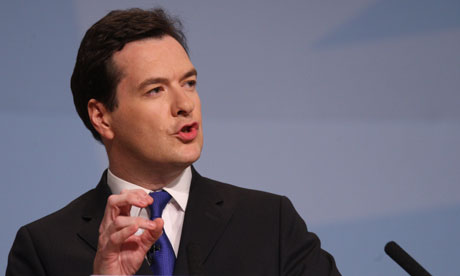
In a candid account, senior party figures told the embassy that the future chancellor had been stopped from making an emergency statement at the height of the financial crisis in 2008 in light of his weaknesses.
The striking criticisms of Osborne are disclosed in an account of the 2008 Tory party conference by Richard LeBaron, deputy head of mission at the US embassy.
A Cameron insider told US officials in a private meeting that it had been decided Cameron should deliver the speech "as private party polling indicated that the public feel Osborne lacks the necessary 'gravitas'. Somewhat unfairly, party officials thought, polling indicated that Osborne was seen as lightweight and inexperienced, in part due to his high-pitched vocal delivery."
The senior Tory said Gordon Brown's warning at the Labour conference that the financial crisis meant it was "no time for a novice" had struck home. "This party insider also revealed that Brown's charge that Cameron was a 'novice' at a time of crisis had gained significant traction with voters," the cable said. "Internal Tory spot polling had found, worryingly for the Conservatives, that contrary to the general consensus, if an election were held the next day, Gordon Brown would be re-elected, albeit with a vastly reduced Labour majority."
LeBaron said of Cameron's conference speech: "If Cameron's aim was to convince the public that he has serious policies and will bring changes, then he succeeded in the eyes of much of the press. Cameron may have faced criticism that his speech failed to lay out, in specifics, the party's plans for government but no doubt he is trying to avoid the fate of previous leaders who, having set out a detailed platform far in advance of any general election, later had their best ideas taken by the Labour government."
SOURCE
WikiLeaks cables: Mervyn King had doubts over Cameron and Osborne
Diplomatic memos reveal Bank governor thought top Conservatives lacked experience to deal with deficit


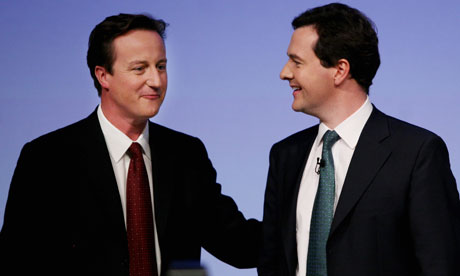
Mervyn King told the US ambassador, Louis Susman, he had held private meetings with the two Conservative politicians before the election to urge them to draw up a detailed plan to reduce the deficit.
He said the pair operated too much within a narrow circle and "had a tendency to think about issues only in terms of politics, and how they might affect Tory electorability". He also predicted that economic recovery would be "a long drawn-out process", since Britain had not been through an economic restructuring.
His apparent pressure on the Tories, a few months before the election, gives further credence to the claim that King was central in persuading leading coalition figures to back a far more dramatic deficit-reduction programme than any politician advocated during the election campaign. He has recently been criticised by members of the Bank's monetary policy committee for straying into politics.
The cables released today also disclose:
• Internal Tory polling found Osborne lacked gravitas with the public, partly due to his "high-pitched vocal delivery". As a result, Cameron, not Osborne, made the special address on the economic crisis to the party conference in the autumn of 2008.
• The defence secretary, Liam Fox, told the Americans that the Tories would be tougher on Pakistan because they were less reliant on votes from the Pakistani community than Labour.
• King believes Europe's sovereign debt crisis will accelerate political union. "Leaders in Germany and France have recognised that allowing monetary union to happen without corresponding political cohesion was a mistake and one that needed to be rectified," King told American diplomats.
• The Liberal Democrats' two top strategists, Polly Mackenzie and Chris Saunders, now both working in government, planned to run a fierce anti-Cameron election campaign, describing him as "out of touch with real life". The death of Cameron's son Ivan forced them to drop the plan since it "eliminated these vulnerabilities".
• Referring to Muslim extremists in Britain from Pakistan, Cameron told the Americans at a meeting in April 2009 that under Labour "we let in a lot of crazies and did not wake up early enough".
There is a broad expectation that the governor of the Bank of England will behave with political neutrality, and will not seek to interfere directly in macro-economic policy, the preserve of the Treasury and politicians. Yet the cables reveal he pressed Cameron for details of his deficit plan.
"King expressed great concern about Conservative leaders' lack of experience," Susman wrote in his classified dispatch to the US secretary of state, Hillary Clinton, after his 16 February meeting with the governor. "[He] opined that party leader David Cameron and shadow chancellor George Osborne have not fully grasped the pressures they will face from different groups when attempting to cut spending.
"In recent meetings with [Cameron and Osborne], he has pressed for details about how they plan to tackle the debt but received only generalities in return. Both Cameron and Osborne have a tendency to think about issues only in terms of politics and how they might affect Tory electorability.
"King also expressed concern about the Tory party's lack of depth. Cameron and Osborne have only a few advisers and seemed resistant to reaching out beyond their small inner circle."
In a section headed "Conservatives: not prepared", the ambassador said King had stated that "hundreds of government officials will make pleas of why their budgets should not be reduced".
A Bank spokeswoman responded tonight: "The governor has a very effective working relationship with the prime minister and the chancellor."
King's defenders would argue he was not seeking to press the Conservatives to follow a specific deficit path, but given the state of the markets it would be legitimate for him to ask them to put detailed plans in place. Arguably this scepticism over the ability of Osborne and Cameron to press ahead with a strong deficit reduction plan has proved unfounded since they have announced a programme far more ambitious than expected.
King told Susman he had fears the "Cameron/Osborne partnership was not unlike the Tony Blair/Gordon Brown team of New Labour's early years, when both worked well together when part of the opposition party, but fissures developed – for many reasons – once Labour was in power. Similar tensions could arise if Cameron and Osborne disagreed on how to handle the deficit, and the lack of depth in their inner circle would aggravate the situation."
The governor was gloomy about economic prospects, Susman reported. "It was hard to be optimistic about recovery in 2010," King argued, and noted "a double-dip recession was still a possibility".
It is known that King, in the wake of the coalition's formation, played a role in persuading the Liberal Democrat leader, Nick Clegg, that major steps were needed to prevent bond traders pulling the plug on the British economy after the collapse of confidence in other debt-ridden countries, such as Greece.
Accounts of the coalition negotiations have also revealed that Osborne, in his talks with the Lib Dems, said he had the support of King for his deficit programme. But it is the first time it has been revealed King pressed for a detailed plan.
The cables also reveal King was not the only source of disobliging remarks about the Tory leadership, according to Susman.
The rightwing Conservative MP for Sevenoaks and now Conservative deputy chairman, Michael Fallon, also confided his doubts to US diplomats.
His remarks were detailed in a cable sent in October 2008 titled: "Conservative party caught flat-footed by Brown's quick manoeuvres on financial crisis, says senior Tory MP".
It stated: "The Tories' response to the crisis has been regrettably tepid … The Conservative party felt the absence of a strong shadow chancellor and the party's counter-proposals to Labour's plans have been 'all over the place'. Fallon particularly criticised Osborne's op-ed piece in the October 28 Daily Telegraph as a 'weak', almost laughable, response to the economic crisis."
Mark Tokola, the embassy's economic minister at the time, concluded: "Fallon's comments to us reflected Conservative frustration – and some grudging admiration – for prime minister Brown's skill in seizing the high ground during the economic crisis.
SOURCE
Student protesters ignore winter freeze with mass rallies against tuition fees
• Marches in cities across UK pass off mostly peacefully
• Metropolitan police reports 153 arrests in London
• Metropolitan police reports 153 arrests in London
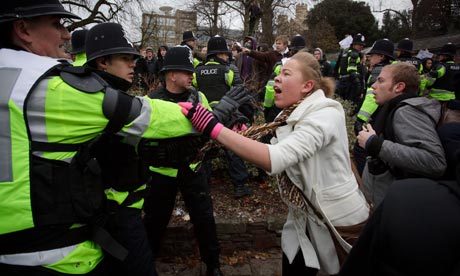
Large demonstrations took place in Brighton, Birmingham, Bristol, Manchester, Newcastle, Oxford and London. The Metropolitan police said 153 arrests had been made in the capital, 146 of which occurred after a group refused to leave Trafalgar Square at the end of the demonstration in London. Windows were smashed and missiles thrown at police, who charged at protesters with batons.
Students climbed on rooftops, stormed council buildings and stopped traffic in dozens of town centres, many saying they hoped the display of feeling would reverberate in Westminster.
Earlier there had been chaotic scenes in the capital when 4,000 students marching toward parliament tried to evade what they believed were attempts by police to "kettle" them in the bleak weather.
The demonstrators responded by dispersing across the city in separate marches, leading police in cat-and-mouse chases. One "feeder" march headed into the City, while others meandered past bemused onlookers at Oxford Circus and Hyde Park Corner, and near Buckingham Palace, stopping traffic en route.
"This is one of the most bizarre demonstrations I have been on," said Michael Chessum, 21, as he jogged up Regent Street with a group of riot police in tow. "It has been a shambolic policing operation because we agreed with them beforehand that we would march along Whitehall – but the spirit and determination of the students to get their point across has been pretty impressive."
The Met denied it had intended to kettle protesters, despite evidence of metal barriers and rows of officers waiting along Whitehall. It blamed the confusion on protesters, who, the force said, had begun their march earlier than agreed. "We made sure we had a flexible plan and sufficient resources to enable people to come back to Trafalgar Square where the protest was due to be held," said Chief Inspector Jane Connors. "That is what we did, moving around London, encouraging people to come back and meet together. We wanted to minimise disruption."
The mood was more harmonious elsewhere, although in Brighton about 600 protesters marched through the city before trying to force their way into Hove town hall. About 100 people managed to scale the roof of a car park and threw missiles, said police, but there were no arrests. Students also scaled a roof in Liverpool, where there were two arrests.
In Newcastle, students occupying a university building marched through the city centre in a peaceful event. Northumbria police said in a statement they had "nothing but praise" for the campaigners. "There were no arrests and no reports of any trouble of any kind," the force said.
Ten people were arrested in Bristol when about 1,000 protesters from both universities lit flares and pelted police with mustard. The M32 was closed when it seemed that the march might go towards the motorway.
In Birmingham, about 40 protesters broke into a council hall building, prompting a standoff with security and police. There were similar scenes in Leeds, where about 40 students occupied a university building, and in Oxford, where students invaded the county council offices.
Video footage showed protesters entering the Oxford building and walking through corridors before being ejected by police. The Conservative leader of the local authority, Keith Mitchell, said on Twitter: "County Hall invaded by an ugly, badly dressed student rabble. God help us if this is our future."
Greater Manchester police said there were five arrests in the city, but that only a "loose cordon" of officers was placed around hundreds of demonstrators who had gathered in the city centre.
About 400 students also walked peacefully through Cambridge, and, in Edinburgh, 300 protesters marched along the Royal Mile in the city and gathered at a rally outside the Scottish parliament. There was also an impromptu sit-in at Queens University, Belfast, and at the Trent building on Nottingham University's campus.
The scale and reach of this month's student protests have shocked the authorities, who fear that mobilisation against cuts could spread. Riot police were called to Lewisham town hall on Monday night when 100 protesters in the London borough tried to force their way into a meeting where councillors were voting to cut the budget by £60m. Police said arrests were made and several officers received minor injuries. The same protest groups are expected to focus on a council meeting in Camden, north London, tomorrow.
Many of the protests were organised by students occupying up to 32 university buildings across Britain. They have largely been independent of the National Union of Students. Threatened with a no-confidence vote, the NUS president, Aaron Porter, recently apologised for the union's "spineless" caution toward student activism and promised more support.
SOURCE
Student demonstrations: A game of protest Monopoly
This protest feels like kiss chase – or, when I see a policeman punch a boy, entirely without provocation, punch chase

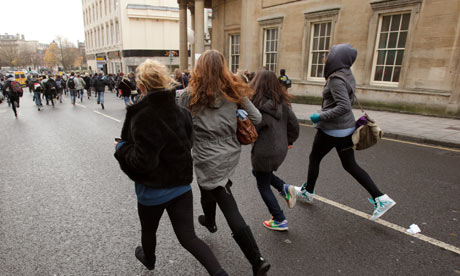
Whenever we see a block of police in neon jackets we run, or are chased away, sometimes down boulevards that are closed and empty, and sometimes through traffic-choked alleys. Tourists take photos. The odd white van toots at this mass of running students. An old man shouts: "Go back to bed!"
I do not know who is leading us, but we don't stop running. The march is fracturing – people are going up different streets and getting lost. Texts come through from the front, giving information. There may be a demonstration at Topshop, or maybe at Liberal Democrat HQ on Cowley Street. But no – we just run down Piccadilly Circus and into Regent Street, then Oxford Street. "I don't feel like a protester," says a music student. "I feel like a tourist."The students dance across Aldwych, singing It Must Be Love, by Madness, before breaking again into a run down to the Embankment. It feels like kiss chase – or, when I see a policeman punch a boy out of the way, entirely without provocation, punch chase. "I'm going," says one girl. "I have a seminar."
Soon, we are back in Trafalgar Square. We have played protest Monopoly for two hours and now we have stopped. The banners – Don't Put the Kettle On, Mr Cameron and I Can't Believe It's Not Thatcher – are lowered, and the leaders climb on the plinth below Nelson's column and speak, asking the students to come back next week. If we have been running from – or to – a fight all day, we get it now. A group of boys charge a police line and fall over. A smoke bomb is thrown, then a can of beer. The police move forward to kettle the students. And above us, on the steps of the National Gallery, tourists look confused at this vision of Britain 2010, angry and fighting in the snow.
SOURCE
Vince Cable considers tuition fees abstention for sake of Lib Dem unity
Business secretary says he believes fees increase is the correct policy but could abstain as part of collective vote
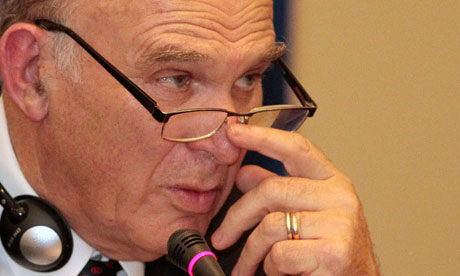
The party's former deputy leader, now business secretary in the coalition government with the Conservatives, made the pledge as the Lib Dem high command struggles to find a common voice in the parliamentary vote on the fee rise, which is expected before the Christmas recess.
Cable's successor as deputy leader, Simon Hughes, has been pressing for the party to abstain. Nick Clegg, the deputy prime minister and party leader, today refused to say how he will vote.
Labour kept up the pressure on the Lib Dems today. The party used an opposition day debate to call on the government to publish more information on its proposals and to advertise Labour's view that the rise is being used to plug gaps left by cuts in government spending. Labour wants the white paper on higher education to be published before the house is asked to vote on it.
Cable said: "If we all abstain, then that is the position I am happy to go along with. There is an option that we all abstain together and we are considering that.
"My own personal instinct – partly because I am the secretary of state responsible for universities and partly because I think the policy is right – is very much to vote for it. But we have got to vote as a group, collectively, and we are discussing how we do that.
"My position is somewhat different, but I am willing to go along with my colleagues. We are a disciplined party: we work together. We are clearly going through a difficult period over this issue and we want to support each other."
Lib Dem MPs have been wrestling with a pre-election promise not to support an increase but now find themselves presiding over a near-trebling of fees. The coalition agreement allows them to abstain, but many feel they must be true to their promise and vote against it.
A petition signed by 104 former Lib Dem parliamentary candidates called on Cable, Clegg and their fellow MPs to abide by the pre-election pledge to avert "many more years back in the political wilderness".
Yesterday the Welsh assembly announced Welsh students would not have to pay the increase in fees regardless of where in the UK they go to university. Setting out its response to Cable's proposals, Welsh education minister Leighton Andrews said that universities could charge the £6,000 to £9,000 range being charged by English universities.
"The increase in fees for Welsh-domiciled students, whether they study in England or Wales or Scotland or Northern Ireland, will be paid by the Welsh Assembly government," said Andrews. "They will not have to find either £6,000 or £9,000 to study. The public purse will continue to subsidise them."
The Tories published research suggesting that students paying a graduate tax like that proposed by the Labour leader, Ed Miliband, would end up paying back more money than under the scheme proposed by the government. Analysis by new Tory MP Chris Skidmore suggests the poorest graduates could end up paying back £5,000 more during their working lives.
SOURCE
These student protests will grow with or without Aaron Porter's support
The NUS leader's belated support for the university occupations reveals someone uneasy with radical direct action

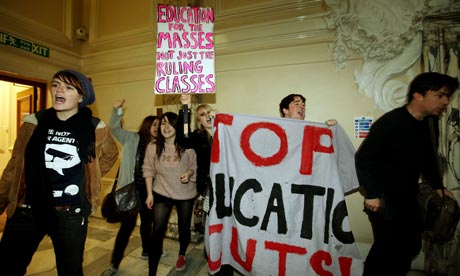
It was in such a meeting that we heard news of NUS president Aaron Porter's statement of support for the anti-cuts occupations that are ongoing in many of the country's universities and look likely to grow. A ripple of polite applause crept across our lecture theatre but in general the mood was indifferent. Compared with the times we've received emails from prominent political activists, promises of "dinner for all" from our lecturers or words of congratulations from local people, it didn't seem to matter that much.
It is our occupation's atmosphere of radical, creative discussion and collective action that might explain why Porter's apology for "dithering" in recent weeks fell a little flat. On the second National Day of Action today, and after six nights, our occupation is stronger than ever. Maintaining easy access in and out of the building has meant our space has been available for local sixth form and college students as well, providing a supportive environment for lecturers to have meetings about the cuts. We have organised our own daily educational programme, open to the public, as well as helping to allow scheduled classes to continue in our occupied space. Calls from local and national press are now almost as frequent as donations of food and blankets.
Another reason we were unmoved by Porter's statement was perhaps because his "U-turn" is a reflection of what we have experienced locally with our student representatives. They too have made new promises to support anti-cuts campaigns but we have learned through six days of successful occupation that this support, though welcome, is not vital. Like our sabbatical officers, Aaron Porter should support students engaged in peaceful direct action to defend their education. It remains to be seen how his statements to this effect will impact on those in the student movement he labels "unrepresentative" because they venture beyond the NUS blueprint for fighting cuts.
The action of occupying a university is not merely to challenge university managements to come out against cuts, nor is it only to put pressure on the coalition to stop talking misleadingly about "togetherness" when it comes to education reforms. Occupations are not just a political tactic that the NUS supports or does not. To occupy a university space is to fundamentally question what education is for, how teaching and learning is organised, whose decisions are acted upon and how those decisions are made. We are challenging relationships taken for granted and stimulating ideas for different ways of organising society.
Aaron Porter should join this collective effort to re-imagine education. But this must mean he accepts what will sometimes be a muddled conversation about the way we organise and protest: we are learning a lot of this as we go along. We have not forgotten Porter's initial statements following the protests at Millbank. His condemning of "violence", without distinguishing between people and windows, felt like a lazy dismissal of radicalism full stop. The student movement needs a fighting union which can be relied upon to support and educate its members about taking all actions against cuts. Porter's recent statements reflect his response to the strength of the growing grassroots student movement. This is an encouraging reflection of our collective political potential to suggest alternatives for education and necessarily perhaps for student representation.
This movement is bigger than Aaron Porter. It is bigger than the universities and bigger than the project of an occupied lecture theatre. In the north-east, the impetus for actions so far has come primarily from school and college students. This energy is in turn spreading across the wider community. This fightback will continue with or without Aaron Porter's support. It is simply too serious now to dwell for any length of time on what could be more empty promises. We are busy organising, occupying and reimagining what we want education to be. In short, we have got more pressing things to do.
SOURCE
Student protests: Most marches peaceful, battles in London and Bristol
Arrests in London and Bristol but peaceful demonstrations elsewhere on third day of anti-cuts protests
The third mass protests against the government's higher education plans took place yesterday as thousands of students took to the streets despite the freezing weather.
Large demonstrations took place in Brighton, Birmingham, Bristol, Manchester, Newcastle, Oxford and London. The Metropolitan police said 153 arrests had been made in the capital, 146 of which occurred after a group refused to leave Trafalgar Square at the end of the demonstration in London. Windows were smashed and missiles thrown at police, who charged at protesters with batons.
Students climbed on to rooftops, stormed council buildings and stopped traffic in dozens of town centres, many saying they hoped the display of feeling would reverberate in Westminster.
Earlier there had been chaotic scenes in the capital when 4,000 students marching toward parliament tried to evade what they believed were attempts by police to "kettle" them in the bleak weather.
The demonstrators responded by dispersing across the city in separate marches, leading police in cat-and-mouse chases. One "feeder" march headed into the City, while others meandered past bemused onlookers at Oxford Circus and Hyde Park Corner, and near Buckingham Palace, stopping traffic en route.
"This is truly one of the most bizarre demonstrations I have been on," said Michael Chessum, 21, as he jogged up Regent Street with a group of riot police in tow. "It has been a shambolic policing operation because we had agreed with them beforehand that we would march along Whitehall – but the spirit and determination of the students to march and get their point across has been pretty impressive."
The Met denied it had intended to kettle protesters, despite evidence of metal barriers and rows of officers waiting along Whitehall. It blamed the confusion on protesters, who, the force said, had begun their march earlier than agreed. "We made sure we had a flexible plan and sufficient resources to enable people to come back to Trafalgar Square where the protest was due to be held," said Chief Inspector Jane Connors. "That is what we did, moving around London, encouraging people to come back and meet together. We wanted to minimise disruption."
The mood was more harmonious elsewhere in the country, although in Brighton about 600 protesters marched through the city before trying to force their way into Hove town hall. About 100 people managed to scale the roof of a car park and threw missiles, said police, but there were no arrests. Students also scaled a roof in Liverpool, where there were two arrests.
In Newcastle, students occupying a university building marched through the city centre in a peaceful event. Northumbria police said in a statement they had "nothing but praise" for the campaigners. "There were no arrests and no reports of any trouble of any kind," the force said.
Ten people were arrested in Bristol when about 1,000 protesters from both universities lit flares and pelted police with mustard. The M32 was temporarily closed when it seemed that the march might go towards the motorway.
In Birmingham, about 40 protesters broke into a council hall building, prompting a standoff with security and police. There were similar scenes in Leeds, where about 40 students occupied a university building, and in Oxford, where students invaded the county council offices.
Video footage showed protesters entering the Oxford building and walking through corridors before being ejected by police. The Conservative leader of the local authority, Keith Mitchell, said on Twitter: "County Hall invaded by an ugly, badly dressed student rabble. God help us if this is our future."
Greater Manchester police said there were five arrests in the city, but that only a "loose cordon" of officers was placed around hundreds of demonstrators who had gathered in the city centre.
About 400 students also walked peacefully through Cambridge, and, in Edinburgh, 300 protesters marched along the Royal Mile in the city and gathered at a rally outside the Scottish parliament. There was also an impromptu sit-in at Queens University, Belfast, and at the Trent building on Nottingham University's campus.
The scale and reach of this month's student protests have shocked the authorities, who fear that mobilisation against government austerity cuts could spread. Riot police were called to Lewisham town hall in south London on Monday night when 100 protesters tried to force their way into a meeting where councillors were voting to cut the budget by £60m. Police said arrests were made and several officers received minor injuries. The same protest groups are expected to focus on a council meeting in Camden, north London, tonight.
Many of the protests were organised by students who are occupying as many as 32 university buildings across Britain. They have taken place largely independently of the National Union of Students. Threatened with a no-confidence vote, the NUS president, Aaron Porter, recently apologised for the union's "spineless" caution toward student activism and promised more support.
SOURCE
Large demonstrations took place in Brighton, Birmingham, Bristol, Manchester, Newcastle, Oxford and London. The Metropolitan police said 153 arrests had been made in the capital, 146 of which occurred after a group refused to leave Trafalgar Square at the end of the demonstration in London. Windows were smashed and missiles thrown at police, who charged at protesters with batons.
Students climbed on to rooftops, stormed council buildings and stopped traffic in dozens of town centres, many saying they hoped the display of feeling would reverberate in Westminster.
Earlier there had been chaotic scenes in the capital when 4,000 students marching toward parliament tried to evade what they believed were attempts by police to "kettle" them in the bleak weather.
The demonstrators responded by dispersing across the city in separate marches, leading police in cat-and-mouse chases. One "feeder" march headed into the City, while others meandered past bemused onlookers at Oxford Circus and Hyde Park Corner, and near Buckingham Palace, stopping traffic en route.
"This is truly one of the most bizarre demonstrations I have been on," said Michael Chessum, 21, as he jogged up Regent Street with a group of riot police in tow. "It has been a shambolic policing operation because we had agreed with them beforehand that we would march along Whitehall – but the spirit and determination of the students to march and get their point across has been pretty impressive."
The Met denied it had intended to kettle protesters, despite evidence of metal barriers and rows of officers waiting along Whitehall. It blamed the confusion on protesters, who, the force said, had begun their march earlier than agreed. "We made sure we had a flexible plan and sufficient resources to enable people to come back to Trafalgar Square where the protest was due to be held," said Chief Inspector Jane Connors. "That is what we did, moving around London, encouraging people to come back and meet together. We wanted to minimise disruption."
The mood was more harmonious elsewhere in the country, although in Brighton about 600 protesters marched through the city before trying to force their way into Hove town hall. About 100 people managed to scale the roof of a car park and threw missiles, said police, but there were no arrests. Students also scaled a roof in Liverpool, where there were two arrests.
In Newcastle, students occupying a university building marched through the city centre in a peaceful event. Northumbria police said in a statement they had "nothing but praise" for the campaigners. "There were no arrests and no reports of any trouble of any kind," the force said.
Ten people were arrested in Bristol when about 1,000 protesters from both universities lit flares and pelted police with mustard. The M32 was temporarily closed when it seemed that the march might go towards the motorway.
In Birmingham, about 40 protesters broke into a council hall building, prompting a standoff with security and police. There were similar scenes in Leeds, where about 40 students occupied a university building, and in Oxford, where students invaded the county council offices.
Video footage showed protesters entering the Oxford building and walking through corridors before being ejected by police. The Conservative leader of the local authority, Keith Mitchell, said on Twitter: "County Hall invaded by an ugly, badly dressed student rabble. God help us if this is our future."
Greater Manchester police said there were five arrests in the city, but that only a "loose cordon" of officers was placed around hundreds of demonstrators who had gathered in the city centre.
About 400 students also walked peacefully through Cambridge, and, in Edinburgh, 300 protesters marched along the Royal Mile in the city and gathered at a rally outside the Scottish parliament. There was also an impromptu sit-in at Queens University, Belfast, and at the Trent building on Nottingham University's campus.
The scale and reach of this month's student protests have shocked the authorities, who fear that mobilisation against government austerity cuts could spread. Riot police were called to Lewisham town hall in south London on Monday night when 100 protesters tried to force their way into a meeting where councillors were voting to cut the budget by £60m. Police said arrests were made and several officers received minor injuries. The same protest groups are expected to focus on a council meeting in Camden, north London, tonight.
Many of the protests were organised by students who are occupying as many as 32 university buildings across Britain. They have taken place largely independently of the National Union of Students. Threatened with a no-confidence vote, the NUS president, Aaron Porter, recently apologised for the union's "spineless" caution toward student activism and promised more support.
SOURCE
2010/11/30
生活費用漲幅超通脹英國居之不易
生活費用漲幅超通脹英國居之不易 更新時間 2010年 7月 6日, 格林尼治標準時間09:01

↑英國過去10年日常必需品的漲幅超過通脹50%。
英國的一個調查報告顯示,一個人要想在英國把日子過到「可接受的生活水平」,一年至少需要1.4萬英鎊。
英國約瑟夫·隆特利基金會(JRF)所做的調查報告還說,對於一個由夫婦二人和兩個孩子組成的家庭來說,要過這種生活每年則至少需要2.92萬英鎊。
這些數字顯示,英國最低工資和最低收入標準之間的差距越來越大。
JRF說,產生這一現象的主要原因是生活必需品價格的上漲。並說,新政府應當參考這些數字制定發展與解決貧困的政策。
「可以接受」
JRF的數字主要反映了自2008年以來英國家庭生活必需品價格的上漲幅度以及對「可以接受的生活標準」的新定義。
例如,電腦和互聯網服務現在已經成為一般家庭的生活必需品,而在國內某地度一周假也被認為屬於「可接受的生活水平」的一部分。
其他一些重要的調查數字顯示,雖然過去10年英國的通脹為23%,但生活必需品價格卻上漲了38%,其中包括食品價格上漲37%,公交車費上漲59%,社區稅上漲67%。
報告說,這項調查表明,一旦出現經濟不景氣,那些生活水平接近最低收入線的家庭就可能會出現生活上的困難。
而他們目前所面臨的最大困難是食品價格和稅收的上漲。
SOURCE
↑英國過去10年日常必需品的漲幅超過通脹50%。
英國的一個調查報告顯示,一個人要想在英國把日子過到「可接受的生活水平」,一年至少需要1.4萬英鎊。
英國約瑟夫·隆特利基金會(JRF)所做的調查報告還說,對於一個由夫婦二人和兩個孩子組成的家庭來說,要過這種生活每年則至少需要2.92萬英鎊。
這些數字顯示,英國最低工資和最低收入標準之間的差距越來越大。
JRF說,產生這一現象的主要原因是生活必需品價格的上漲。並說,新政府應當參考這些數字制定發展與解決貧困的政策。
「可以接受」
JRF的數字主要反映了自2008年以來英國家庭生活必需品價格的上漲幅度以及對「可以接受的生活標準」的新定義。
例如,電腦和互聯網服務現在已經成為一般家庭的生活必需品,而在國內某地度一周假也被認為屬於「可接受的生活水平」的一部分。
其他一些重要的調查數字顯示,雖然過去10年英國的通脹為23%,但生活必需品價格卻上漲了38%,其中包括食品價格上漲37%,公交車費上漲59%,社區稅上漲67%。
報告說,這項調查表明,一旦出現經濟不景氣,那些生活水平接近最低收入線的家庭就可能會出現生活上的困難。
而他們目前所面臨的最大困難是食品價格和稅收的上漲。
SOURCE
700萬英國人不工作靠補貼生活 被稱"不知羞恥一代"
2010-09-09 16:59:05
國際線上專稿:據英國《每日郵報》8日消息,根據英國國家統計局的最新調查數據,英國不外出工作的人口數量達到驚人的程度,65歲以下人口中,竟有730萬人從不工作。《每日郵報》將這些人稱為英國“不知羞恥的一代”。
根據英國國家統計局公佈的數據,目前約390萬個英國家庭所有成員都不工作。相關數據顯示,自1998年以來,所有成員都不工作的家庭數量飆升了22%;僅2009年一年內,這樣的家庭就增加了14.8萬個。調查同時顯示,單親家庭的成員不工作的可能性更大。
英國勞務和退休金部表示,調查暗示政府應儘快改革福利體系,讓人們通過工作獲得報酬。此外,還應對福利補貼發放人群進行排查,看這些人是否具備外出工作的條件。如果具備工作條件,應削減他們的福利金,以促使他們儘快工作,自給自足。
英國內政大臣克裏斯·格雷林7日晚表示,上述“驚人”數據是上一屆政府奉行的社會福利改革失敗的最好證明。格雷林說:“在英國的一些地方,一些家庭甚至兩代人都沒有工作。我們不希望未來的一代重蹈上一輩的覆轍。”
據悉,英國政府將於2011年啟動一個“勞動計劃”,強迫和鼓勵失業者儘快找工作,否則將面臨失去福利補貼的風險。(李傑)
source
國際線上專稿:據英國《每日郵報》8日消息,根據英國國家統計局的最新調查數據,英國不外出工作的人口數量達到驚人的程度,65歲以下人口中,竟有730萬人從不工作。《每日郵報》將這些人稱為英國“不知羞恥的一代”。
根據英國國家統計局公佈的數據,目前約390萬個英國家庭所有成員都不工作。相關數據顯示,自1998年以來,所有成員都不工作的家庭數量飆升了22%;僅2009年一年內,這樣的家庭就增加了14.8萬個。調查同時顯示,單親家庭的成員不工作的可能性更大。
英國勞務和退休金部表示,調查暗示政府應儘快改革福利體系,讓人們通過工作獲得報酬。此外,還應對福利補貼發放人群進行排查,看這些人是否具備外出工作的條件。如果具備工作條件,應削減他們的福利金,以促使他們儘快工作,自給自足。
英國內政大臣克裏斯·格雷林7日晚表示,上述“驚人”數據是上一屆政府奉行的社會福利改革失敗的最好證明。格雷林說:“在英國的一些地方,一些家庭甚至兩代人都沒有工作。我們不希望未來的一代重蹈上一輩的覆轍。”
據悉,英國政府將於2011年啟動一個“勞動計劃”,強迫和鼓勵失業者儘快找工作,否則將面臨失去福利補貼的風險。(李傑)
source
Britain goes from dystopia to Arcadia in six months
While we will be eating caviar as a mid-morning snack, other countries will be wandering down trains with a paper cup

The economic figures are looking good, the recovery is more or less on track, and George Osborne allowed himself a mini-gloatette in the Commons yesterday when he made his autumn statement.
I was reminded strongly of a previous chancellor, who also painted a picture of Britain in glowing, sun-drenched colours. When you listened to Gordon Brown, you felt that we lived in a new Arcadia, a land where happy folk, secure in their jobs and incomes, look forward to a golden future, compared to the miserable wretches who live elsewhere.
Why, according to George, our growth rate was predicted over the next few years to be higher than Germany, France, Japan, the US, the eurozone and the EU as a whole.
While we will be living in palaces and eating caviar as a mid-morning snack, those other countries will be wandering down trains with a mangy dog and a paper cup, begging for the price of a cup of tea.
What was more, his figures were from the OBR, the office of budget responsibility – an independent body! They happen to have painted the same lush landscapes Gordon Brown used to depict.
Mr Osborne got, perhaps, a little carried away. As the deficit went down, we were going to save £19bn more than had been forecast. That was £19bn that wouldn't be going to private bond-holders and foreign governments. (Boo, hiss, bond-holders and foreigners. British debt for British debtors!). The theme was that the government had done everything right at exactly the right time. They had taken "decisive" action; I lost track of how many times he used that word. There was a slight problem, in that he had followed the Irish course while, over the past few years, lavishly praising the Irish government. He adopted a cunning response to MPs who pointed this out. He ignored them.
"The plan is working!" he cried. He sounded like Goldfinger. You half-expected him to add: "And you, Mr Bond, will be dead. Now if you will excuse me, I have important business in hand."
Alan Johnson, who followed, was rumbustious and effective. Mr Osborne had taken an "unprecedented gamble". "The chancellor is in the casino, but he hasn't spun the wheel yet!" he said. Things were not looking up. Instead they were looking down. Estimates of growth might be good, but not as good as they had been.
"Growth is going south!" he barked. And the rise in VAT would increase unemployment by 250,000.
But if he was pessimistic, Andrew Tyrie, who chairs the Treasury select committee, was positively glum. The savings ratio had halved, he said, miserably. Never invite this man to your party. He would arrive in a black cape, halt the merrymaking, and announce that a team of traffic wardens was working outside. And that more than one unit of alcohol during the evening would cause lasting health damage.
source
I was reminded strongly of a previous chancellor, who also painted a picture of Britain in glowing, sun-drenched colours. When you listened to Gordon Brown, you felt that we lived in a new Arcadia, a land where happy folk, secure in their jobs and incomes, look forward to a golden future, compared to the miserable wretches who live elsewhere.
Why, according to George, our growth rate was predicted over the next few years to be higher than Germany, France, Japan, the US, the eurozone and the EU as a whole.
While we will be living in palaces and eating caviar as a mid-morning snack, those other countries will be wandering down trains with a mangy dog and a paper cup, begging for the price of a cup of tea.
What was more, his figures were from the OBR, the office of budget responsibility – an independent body! They happen to have painted the same lush landscapes Gordon Brown used to depict.
Mr Osborne got, perhaps, a little carried away. As the deficit went down, we were going to save £19bn more than had been forecast. That was £19bn that wouldn't be going to private bond-holders and foreign governments. (Boo, hiss, bond-holders and foreigners. British debt for British debtors!). The theme was that the government had done everything right at exactly the right time. They had taken "decisive" action; I lost track of how many times he used that word. There was a slight problem, in that he had followed the Irish course while, over the past few years, lavishly praising the Irish government. He adopted a cunning response to MPs who pointed this out. He ignored them.
"The plan is working!" he cried. He sounded like Goldfinger. You half-expected him to add: "And you, Mr Bond, will be dead. Now if you will excuse me, I have important business in hand."
Alan Johnson, who followed, was rumbustious and effective. Mr Osborne had taken an "unprecedented gamble". "The chancellor is in the casino, but he hasn't spun the wheel yet!" he said. Things were not looking up. Instead they were looking down. Estimates of growth might be good, but not as good as they had been.
"Growth is going south!" he barked. And the rise in VAT would increase unemployment by 250,000.
But if he was pessimistic, Andrew Tyrie, who chairs the Treasury select committee, was positively glum. The savings ratio had halved, he said, miserably. Never invite this man to your party. He would arrive in a black cape, halt the merrymaking, and announce that a team of traffic wardens was working outside. And that more than one unit of alcohol during the evening would cause lasting health damage.
source
Subscribe to:
Posts (Atom)
